In the world of business, procurement, manufacturing, wholesale trading, and supply chain management, the terms vendor and supplier are often used interchangeably. Many people assume they mean the same thing. However, in real business operations, there is a significant difference between a vendor and a supplier.
Understanding this difference is important for:
- Manufacturers
- Retail businesses
- Procurement teams
- Startups
- Distributors
- B2B companies
- Import-export businesses
Choosing the wrong business partner or misunderstanding these roles can lead to:
- Supply chain confusion
- Poor inventory management
- Procurement inefficiencies
- Higher operational costs
- Contract misunderstandings
Whether you are starting a business, managing procurement operations, or learning supply chain concepts, this guide will help you clearly understand the difference between vendor and supplier in a simple and practical way.
Instead of textbook definitions, this article focuses on real-world business examples, operational differences, and how companies actually use vendors and suppliers in India and global markets.
Why People Confuse Vendors and Suppliers
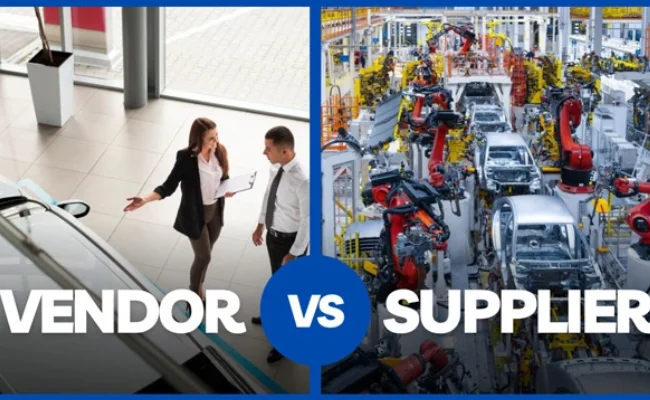
The confusion usually happens because both vendors and suppliers help businesses obtain products or services.
For example:
- A company buying raw materials may call the provider a supplier.
- A retail shop purchasing finished goods may call the same type of provider a vendor.
In reality, both play different roles in the supply chain.
Understanding where they fit can improve:
- Procurement planning
- Vendor management
- Supplier relationship management
- Inventory control
- Business negotiations
What Is a Supplier?
A supplier is a person, company, or manufacturer that provides raw materials, components, or products to another business for further processing, resale, or operational use.
Suppliers are usually positioned at the beginning of the supply chain.
They mainly deal in:
- Raw materials
- Industrial goods
- Bulk products
- Manufacturing inputs
- Wholesale supply
For example:
- A steel company supplying metal sheets to an automobile manufacturer is a supplier.
- A rice mill supplying rice to a packaging company is a supplier.
- A chemical company providing industrial chemicals to factories is a supplier.
Suppliers are critical in manufacturing and industrial operations because they ensure continuous production flow.
What Is a Vendor?
A vendor is a person or business that sells finished products or services directly to customers, retailers, or end users.
Vendors are generally positioned closer to the final consumer in the supply chain.
They usually deal in:
- Finished products
- Retail goods
- Consumer products
- Direct sales
Examples include:
- A grocery shop selling packaged rice to consumers
- An electronics store selling laptops
- An online seller on e-commerce platforms
- A food stall selling snacks
In simple words, vendors are more customer-facing compared to suppliers.
Main Difference Between Vendor and Supplier
Here is a simple comparison table that explains the core differences clearly:
| Basis | Supplier | Vendor |
| Role in Supply Chain | Early stage | Final stage |
| Product Type | Raw materials or bulk goods | Finished products |
| Customer Type | Businesses & manufacturers | End customers or retailers |
| Transaction Volume | Usually bulk | Small or retail quantity |
| Relationship Type | Long-term operational partnership | Sales-focused relationship |
| Main Purpose | Support production or operations | Sell products/services |
| Common Industries | Manufacturing, industrial supply | Retail, e-commerce, local markets |
This difference becomes more important in procurement and supply chain management.
Real-World Example to Understand the Difference
Imagine a company that manufactures packaged snacks.
Step 1: Supplier Role
The company buys:
- Wheat flour
- Edible oil
- Packaging material
The companies providing these materials are suppliers.
Step 2: Vendor Role
After manufacturing the snacks, the products are sold through:
- Supermarkets
- Retail shops
- Online stores
These sellers are vendors.
This example shows that suppliers help create products, while vendors help sell products.
Types of Suppliers in Business
Suppliers can be categorized into different types depending on industry and operations.
Raw Material Suppliers
Provide:
- Metals
- Chemicals
- Agricultural products
- Plastic granules
Used mainly in manufacturing industries.
Wholesale Suppliers
Supply products in bulk quantities to:
- Retailers
- Distributors
- Businesses
Service Suppliers
Provide operational services such as:
- IT services
- Logistics
- Packaging solutions
- Maintenance services
Types of Vendors
Vendors also exist in multiple forms.
Retail Vendors
Sell directly to consumers through:
- Shops
- Supermarkets
- Retail chains
Online Vendors
Operate through:
- E-commerce websites
- B2B marketplaces
- Online platforms
Street Vendors
Small-scale sellers operating in local markets.
Common in India’s retail economy.
Why Understanding the Difference Matters in Business
Many businesses incorrectly manage suppliers and vendors as the same category. This can create operational problems.
Understanding the difference helps in:
Better Procurement Planning
Supplier management requires:
- Bulk negotiations
- Quality control
- Long-term contracts
Vendor management focuses more on:
- Distribution
- Sales
- Market reach
Improved Inventory Management
Suppliers directly affect:
- Production continuity
- Raw material availability
Vendors affect:
- Product movement
- Consumer sales
Better Cost Control
Businesses can negotiate differently with:
- Suppliers for bulk purchasing
- Vendors for sales margins
This improves profitability.
Supplier Relationship vs Vendor Relationship
Supplier Relationship
Supplier partnerships are usually:
- Long-term
- Operationally critical
- Quality-focused
A poor supplier can stop production completely.
Vendor Relationship
Vendor relationships are often:
- Sales-driven
- Market-focused
- Customer-oriented
Businesses may work with multiple vendors simultaneously.
Challenges Businesses Face with Suppliers
Common supplier-related problems include:
- Delayed raw material delivery
- Quality inconsistency
- Price fluctuations
- Supply shortages
This is why businesses invest heavily in supplier relationship management.
Challenges Businesses Face with Vendors
Vendor-related issues may include:
- Poor market reach
- Low sales performance
- Delayed payments
- Brand representation problems
Vendor management becomes especially important in retail and distribution businesses.
Supplier vs Vendor in Modern B2B Industry
Today, digital transformation is changing both supplier and vendor ecosystems.
Modern trends include:
- B2B procurement platforms
- Vendor management software
- Automated inventory systems
- AI-driven supply chain forecasting
- E-commerce vendor networks
Companies are increasingly focusing on:
- Transparency
- Traceability
- Faster procurement cycles
- Data-driven vendor evaluation
How Businesses Choose Good Suppliers
Companies usually evaluate suppliers based on:
- Product quality
- Pricing stability
- Delivery capability
- Technical expertise
- Long-term reliability
Strong suppliers improve operational efficiency significantly.
How Businesses Select Vendors
Vendor selection often depends on:
- Market reach
- Customer base
- Sales capability
- Retail presence
- Brand visibility
Good vendors help businesses grow sales faster.
Frequently Asked Questions (FAQs)
Q: Is every supplier a vendor?
A: No. Suppliers mainly provide raw materials or bulk goods, while vendors sell products directly to customers or retailers.
Q: Can a company be both a supplier and a vendor?
A: Yes. Some businesses supply products to manufacturers and also sell finished goods directly in the market.
Q: Which is more important: supplier or vendor?
A: Both are important. Suppliers support production, while vendors help generate sales and market reach.
Q: Are wholesalers suppliers or vendors?
A: Wholesalers can act as both depending on their role in the supply chain.
Q: Why is supplier management important?
A: Poor supplier management can lead to production delays, inventory shortages, and operational losses.
Final Thoughts
Understanding the difference between a vendor and a supplier is essential for businesses involved in procurement, manufacturing, retail, distribution, and supply chain management.
In simple terms:
- Suppliers help businesses produce products.
- Vendors help businesses sell products.
Both play critical roles in business success, but their responsibilities, positioning, and operational impact are different.
Companies that clearly separate supplier management and vendor management often achieve:
- Better procurement efficiency
- Improved inventory control
- Lower operational costs
- Stronger business relationships
- Higher profitability
As India’s B2B and supply chain sectors continue to modernize, businesses that build strong supplier and vendor networks will gain a major competitive advantage in the long run.